

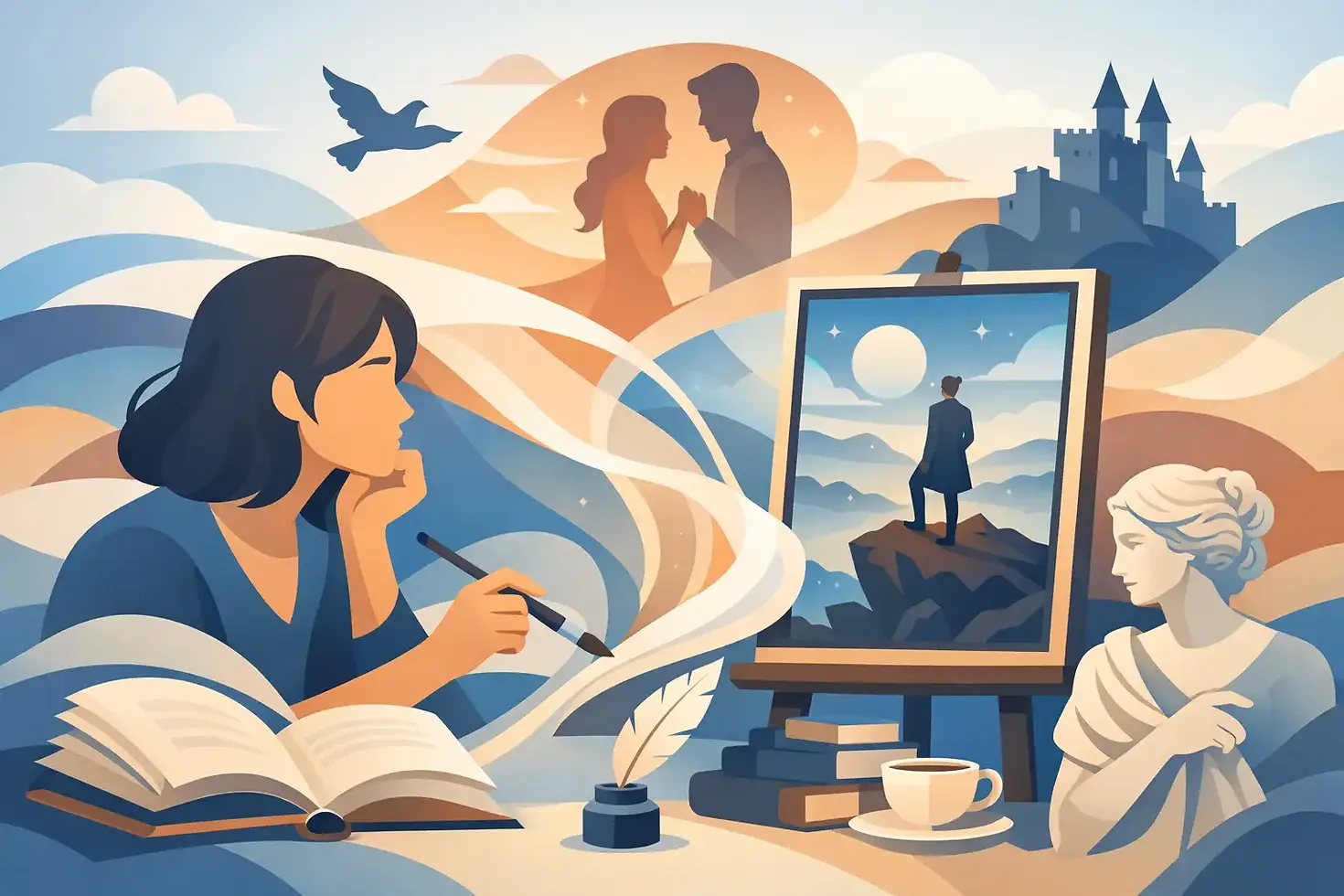
Why Art Inspired by Literature Moves Us

A painted figure standing at a window can say what a full chapter only began to reveal. A field of gold can carry the ache of hope. A single face, lit half in shadow, can hold grief, longing, faith, and love all at once. That is the quiet power of art inspired by literature. It does not replace the written word. It gives it another body, another breath, another way to reach the human heart.
For readers who do not approach books as mere entertainment, this matters deeply. Some stories stay with us because they name what we have lived but could not explain. Some poems leave a mark because they seem to rise from the soul itself. When visual art grows from that kind of writing, it can become more than illustration. It becomes reflection. It becomes prayer. It becomes a visible echo of truth.
What art inspired by literature really does
At its best, literary art does not simply draw a scene from a book. It interprets the spirit of the text. That distinction matters. A literal painting of a character, place, or event may be beautiful, but deeper work asks a more searching question: what did this story awaken?
A novel about resilience may inspire images of broken roads, open skies, and hands lifted toward light. A poem about love may become a portrait filled with warmth, softness, and devotion. A work of history may take shape through symbolic colors, layered textures, and a strong sense of memory. The artist is not only retelling. The artist is listening.
That is why this kind of work often feels intimate. Literature already enters our private world of thought and feeling. It meets us in silence, often when we are searching for meaning. When art emerges from that same source, it carries a similar closeness. It meets the eye, but it also reaches inward.
Why stories become images in the first place
Human beings naturally translate emotion into form. We read about exile and imagine distance. We read about restoration and see light breaking through darkness. We read about romance and picture tenderness before a single kiss is described. The imagination is always painting.
Art makes that inner process visible. It gives shape to the images that live between lines, beneath dialogue, and inside memory. This is especially powerful with inspirational and reflective writing because the message is not confined to plot. The real movement often happens in the soul. A person reads a passage about purpose, forgiveness, identity, or destiny, and something begins to shift. Visual art can hold that shift in a way that feels immediate.
This is one reason spiritually charged and emotionally expressive books so often invite artistic response. They are already rich with symbols - light, doors, rivers, storms, mountains, crowns, gardens, fire. These images carry emotional and sacred weight. They are not decorative. They are bridges between the seen and unseen.
Art inspired by literature and the language of emotion
Some feelings resist direct explanation. Grief can be too layered for ordinary speech. Desire can feel too vulnerable. Hope can be too fragile when spoken too quickly. Literature often reaches these places through metaphor, rhythm, and character. Art can continue that work through color, composition, and atmosphere.
A cool blue background may suggest solitude without naming it. Bold strokes may communicate urgency. Soft light across a figure can suggest peace after struggle. Even empty space can say something. In this way, visual art and literature share a deep calling: both try to honor what is true in human experience, even when truth is difficult to simplify.
For readers who turn to books for healing, clarity, or encouragement, this union can be especially meaningful. A painting inspired by a reflective book may remind someone of a lesson they almost forgot. An image shaped by a poem may restore a feeling of tenderness after a hard season. Sometimes a person cannot return to an entire chapter in the middle of a busy day, but one image can bring the spirit of that chapter back in an instant.
When literary art becomes more than illustration
There is a trade-off in every artistic response to a text. If the art stays too close to the surface of the story, it may feel predictable. If it becomes too abstract, it may lose the emotional thread that made the literature moving in the first place. The most compelling work tends to live between those extremes.
It honors the source material without becoming trapped by it. It leaves room for mystery. It allows the viewer to bring personal memory into the experience. This is where art inspired by literature becomes especially alive. It does not tell you exactly what to feel. It invites you to remember, question, hope, and see yourself more clearly.
A love story, for example, may inspire art that is not about two recognizable characters at all. It may instead focus on gesture, distance, waiting, reunion, or devotion. A historical text may not appear as a literal battlefield or public event, but as a meditation on endurance, sacrifice, and identity. A faith-filled work may move beyond symbols people expect and instead reveal surrender, courage, or divine nearness through mood and movement.
Why this matters for inspirational readers
Readers who seek inspiration are not simply collecting information. They are looking for nourishment. They want words that steady them, challenge them, and call them back to what matters. They are often asking inward questions: Who am I now? What is love asking of me? How do I move forward after loss? Where is purpose found when life feels uncertain?
When literature speaks to those questions, art can extend the encounter. It keeps the message present in everyday life. A painting on a wall, a printed image near a desk, or a visual motif carried across creative work can continue speaking long after the book is closed.
This is one reason the connection between books and visual art feels so natural in a purpose-driven creative space. At Inspirational Books Online, that connection reflects a belief many readers already carry in their hearts - that inspiration is not limited to one form. Truth can arrive as story, poem, image, color, or symbol. What matters is whether it awakens something real.
The creative courage behind literary interpretation
There is also vulnerability in creating art from literature. The artist must love the source enough to be faithful to its spirit, but trust their own voice enough to respond personally. That takes courage.
Not every response will resonate with every reader. One person may see comfort in a piece that another finds sorrowful. One reader may want clear narrative references, while another prefers symbolism and openness. That does not mean the art has failed. It means literature itself is alive. Different hearts receive it differently, and visual art often reveals that beautifully.
This is why personal, author-centered artistic expression can feel so moving. When the same creative vision gives birth to both words and images, there is often a stronger sense of inner unity. The painting does not merely borrow from the book. It grows from the same emotional and spiritual ground.
How to receive art inspired by literature more deeply
The richest way to encounter this kind of work is to slow down. Instead of asking first, What scene is this? ask, What feeling is this carrying? What truth is this trying to reveal? What memory, hunger, or hope does it stir in me?
It also helps to notice the artist's choices. Why these colors instead of others? Why a solitary figure, a horizon, a shadow, a flower, a storm? Why softness here and tension there? These choices are part of the conversation between text and image.
And sometimes, the most meaningful response is not analysis at all. Sometimes it is recognition. You look at a piece, and something in you says yes. Yes, that is what longing feels like. Yes, that is what restoration looks like. Yes, that is the courage I have been trying to find words for.
That moment matters. It reminds us that creativity is not separate from life's deepest questions. It is one way we carry them, honor them, and transform them.
A beautiful book may enter your heart through language, but art can help that truth remain visible when the page is turned. If a story has ever healed you, if a poem has ever steadied you, if a line has ever felt like light in a hard season, then perhaps the image it inspires is not an extra touch at all. Perhaps it is the next way grace chooses to speak.


Comments